
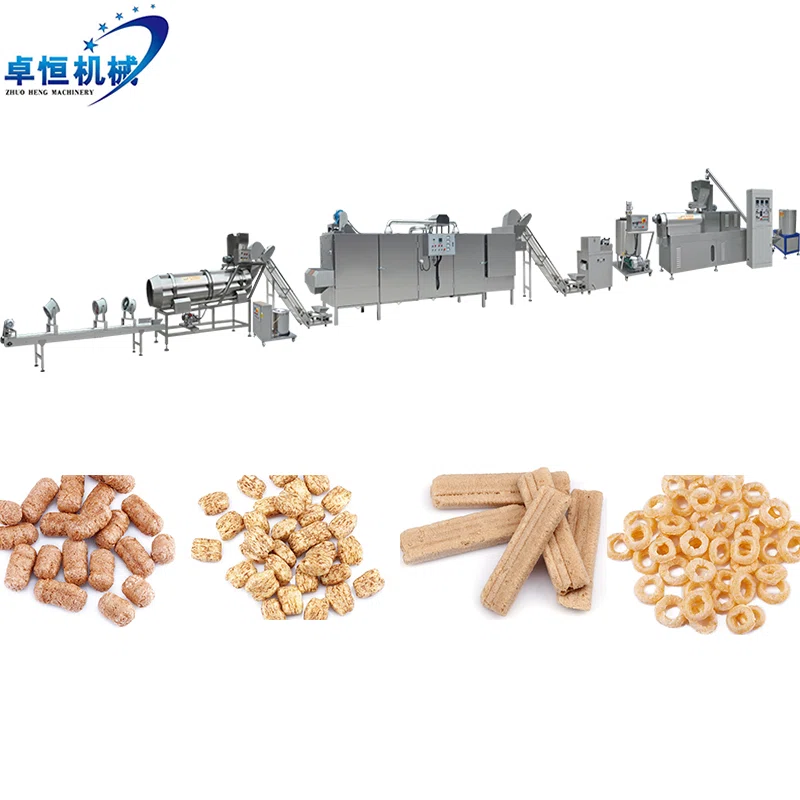
How corn puff sticks are produced
Corn puff sticks are commonly made by direct expansion. A prepared corn-based blend enters the twin-screw extruder, where moisture, heat, pressure and shear create a cooked dough. As it exits the die, pressure drops and the product expands. A cutter controls length before the sticks move through drying and seasoning.
The simple product name covers many possible results. Straight sticks, short curls, dense crunchy pieces and light porous puffs require different die geometry, formula and settings. Send dimensions and a physical reference whenever possible.
Typical equipment route
- Mix and condition: combine corn flour or grits with controlled water and recipe ingredients.
- Feed and extrude: maintain consistent material flow while the screws cook and convey the blend.
- Shape and cut: match die opening and cutter speed to the required diameter and length.
- Dry: reduce moisture and stabilize crispness without excessive color change.
- Season and cool: apply oil and powder coating, then cool before packaging.
Choose capacity after defining the product
The model range begins with the ZH65 at 120–150 kg/h, followed by ZH70 at 200–250 kg/h, ZH85 at 400–500 kg/h and ZH95 at 800–1,200 kg/h. These are reference ranges. The stick’s expansion, density, moisture and dryer load affect actual production.
Control points that affect quality
Uneven feed moisture can cause inconsistent expansion. A mismatched cutter can create variable lengths, while inadequate drying can shorten shelf life or leave the center soft. Seasoning also needs enough oil adhesion for coverage without making the product greasy. These points should be tested as one connected process.
If your target is round rather than stick-shaped, review the cheese balls production route. If the product must be fried after forming, use the fried puffed snacks guide because the downstream equipment is different.