
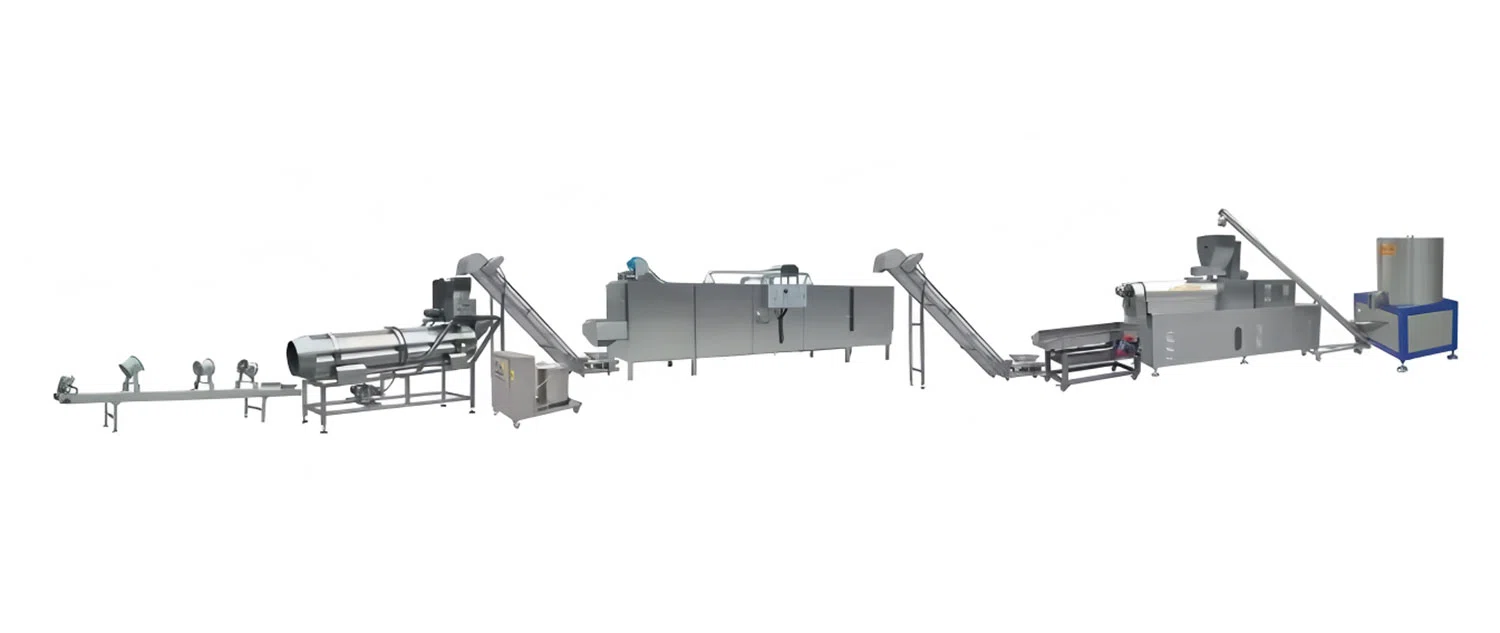
A high-volume platform, not only a larger extruder
The ZH95 is the largest reference model on this site, with a catalog capacity direction of 800–1,200 kg/h. It is aimed at high-volume snack manufacturing where the complete factory system—raw-material preparation, extrusion, drying, flavoring, cooling and packaging—must be designed for continuous coordinated flow.
Reference values are 289 kW installed line power and about 173 kW consumption. These figures are planning references, not a guaranteed energy figure for every snack. The final load changes with product moisture, thermal process, heat source, auxiliary equipment and operating conditions.
Plant infrastructure becomes part of model selection
At this output level, the project should verify transformer capacity, compressed air, water where required, exhaust, ingredient handling, finished-product buffering, packaging speed and maintenance access. A line that produces more snacks than the seasoning or packaging area can handle will not achieve the intended sellable output.
Workshop layout is equally important. Product flow should reduce unnecessary crossings while preserving cleaning and service space. Multiple packing machines or a distribution system may be required depending on bag size and target bags per minute.
Product checks for large-scale production
Small changes in bulk density or moisture become significant at high throughput. The target cheese ball, cereal ring or corn puff should therefore be confirmed by dimensions, texture and formula direction. Interchangeable molds can expand the SKU range, but every recipe and shape needs its own stable process settings.
For an oil-fried puffed snack, frying and de-oiling create a process-specific line. It should not be assumed that the standard direct-expanded drying route can simply be replaced without engineering review.
Compare capacity against demand
ZH95 should be justified by realistic sales and shift planning. If the forecast fits 400–500 kg/h, the ZH85 may offer a more appropriate balance of output and infrastructure. A capacity buffer is useful, but excessive oversizing can reduce utilization and increase project cost.
Documents to prepare
Send a finished-product sample or detailed photos, raw-material and formula information, required hourly and daily output, voltage, heat source, packaging plan and a dimensioned workshop drawing. These inputs allow Zhuoheng to review the complete system instead of quoting the extruder in isolation.