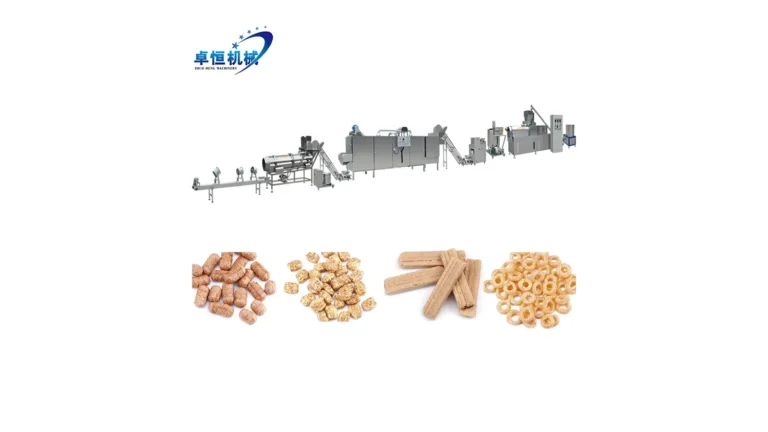
A buyer sends a snack photo and asks for “the same machine.” The photo may show a ring, ball, curl or stick, but it rarely proves how the product was made. Two snacks with a similar shape can leave the extruder in different conditions and require different downstream equipment. That is why the first quotation question should not be “Which model?” It should be “What happens after forming?”
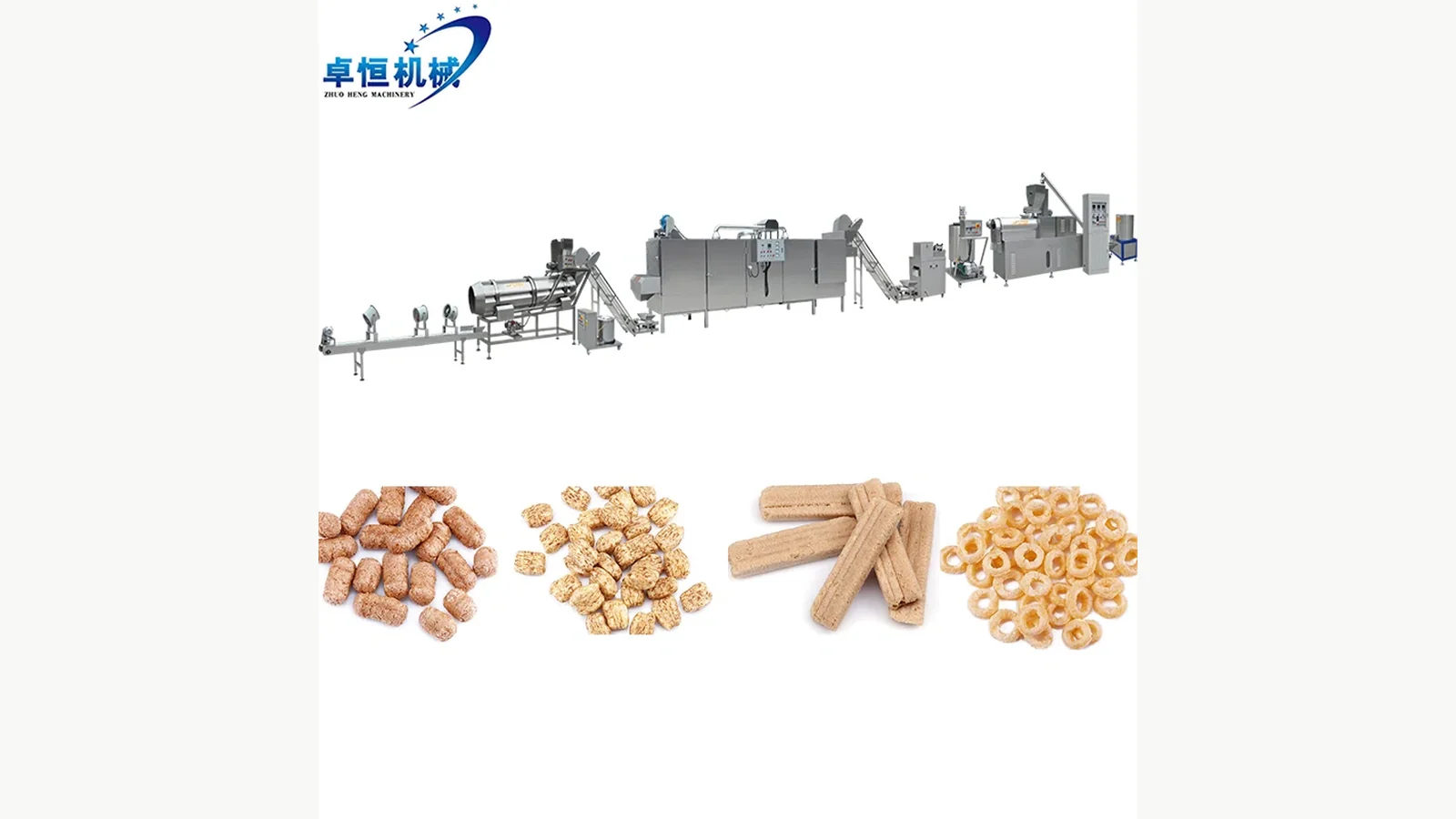
For this product family, the confirmed process backbone is raw-material preparation, mixing, feeding, extrusion or forming, drying or frying, seasoning, cooling and packing. The route divides at the post-extrusion stage. Direct-expanded snacks normally use controlled extrusion to create the structure and then move through drying and seasoning. A confirmed fried puffed snack route adds frying and de-oiling before seasoning. Product evidence must decide between them.
Start With the Finished Snack, Not Its Trade Name
Names such as cheese ball, corn curl or puffed stick are useful for conversation, but they are not a process specification. Regional names can describe different formulas and production methods. A supplier needs a clearer product brief:
- a front and cross-section photo, ideally with a physical sample;
- the main raw materials and current formula status;
- target diameter, length, wall thickness and surface texture;
- whether the reference product is fried, baked, roasted or simply dried;
- target hourly output and daily operating schedule;
- seasoning type, oil application and packing interface;
- local voltage, heating source, room dimensions and destination.
Cutting one snack open is often more useful than sending another package photo. The internal cell structure, wall thickness and surface tell the process engineer more about expansion and finishing. A short production video can also show whether the product enters a dryer, fryer or another finishing stage.
Direct Expansion Builds Structure at the Die
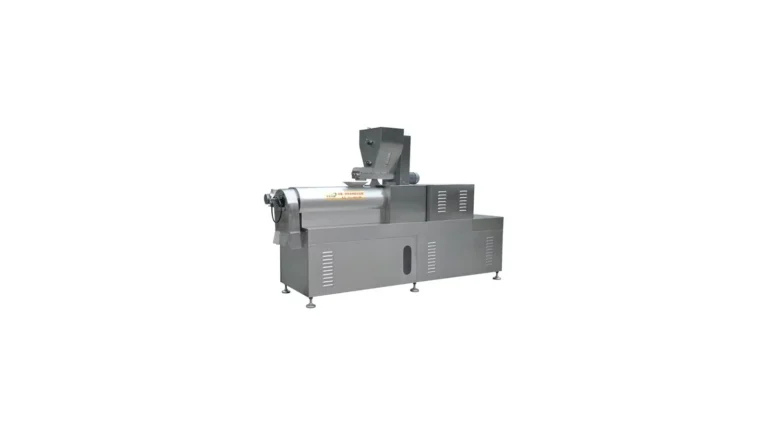
In a direct-expanded route, prepared grain material is mixed with the required moisture and fed into the extruder. Heat, pressure and shear develop inside the barrel. When the material exits the die, the pressure drops and the product expands. The die and cutting system establish the basic profile, while the formula and process settings influence the final structure.
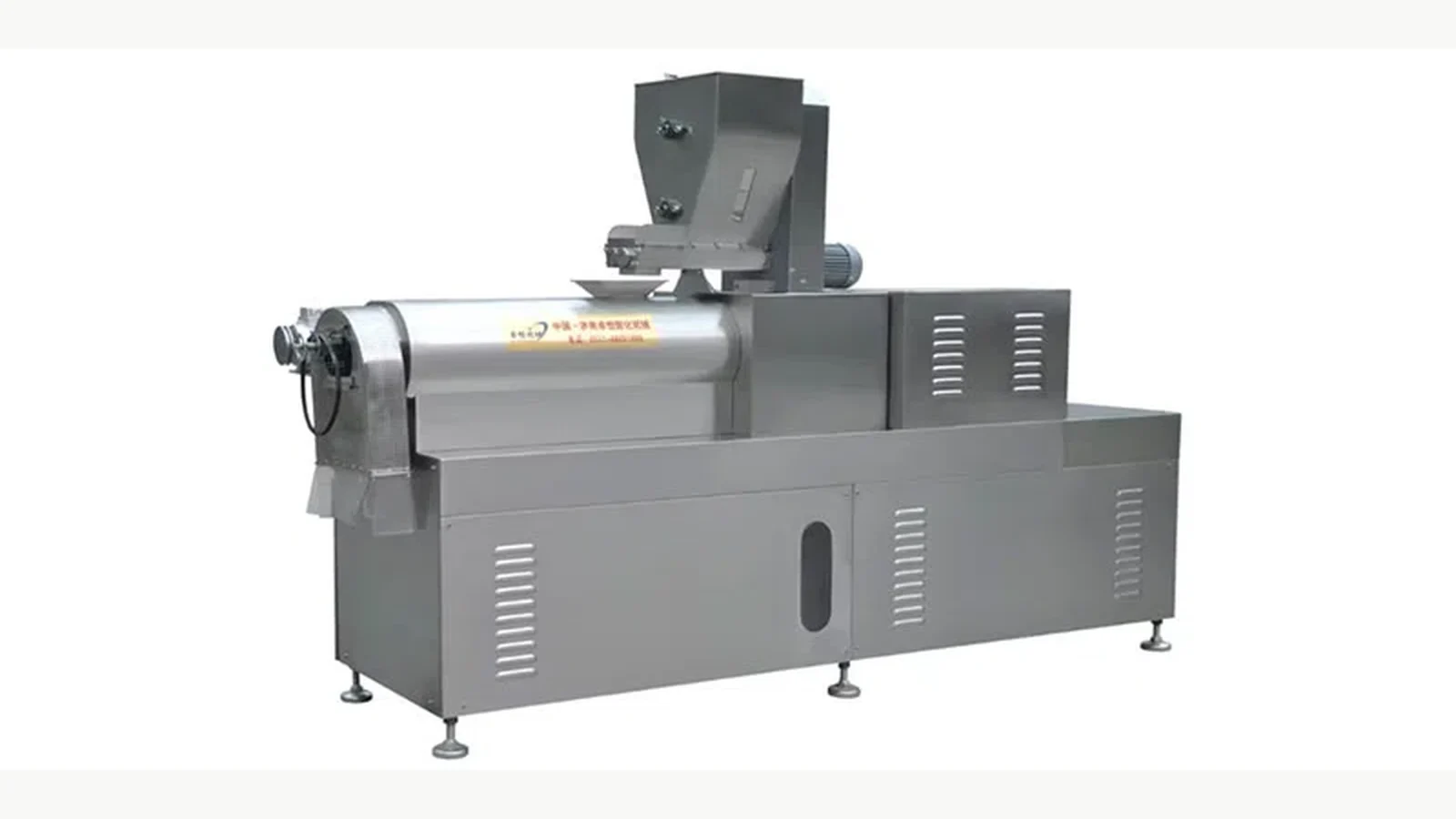
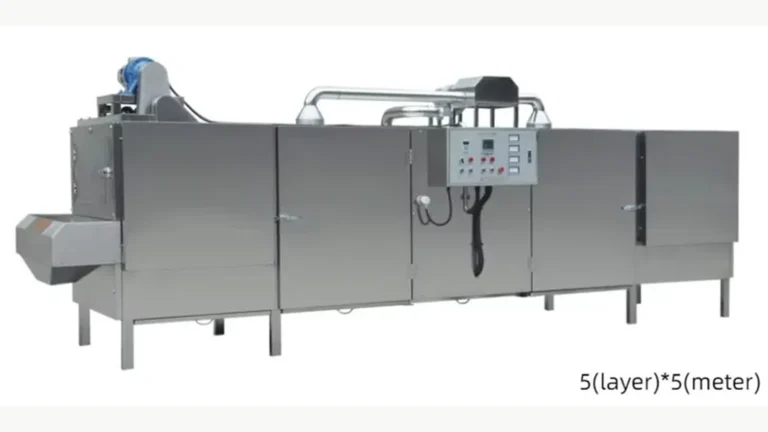
The formed snack is still not ready for packing. Drying removes moisture to stabilize the product, and seasoning adds the required surface flavor. Cooling matters before weighing and sealing because warm product can affect handling and package conditions.
This route is a reasonable starting point when the sample clearly belongs to a direct-expanded grain snack and the desired structure is created as it leaves the die. It is not a blanket answer for every ring, ball or stick. Formula trials, mold confirmation and downstream testing still belong in the project review.
A Fried Route Changes More Than One Machine
Fried puffed snacks need a different downstream conversation. After extrusion or forming, the product enters a confirmed frying step, followed by oil removal and seasoning. The quotation therefore has to define the fryer, de-oiling arrangement, oil handling, ventilation and cleaning scope—not simply replace a dryer with a fryer on a generic equipment list.
The finished-product target should specify what the buyer means by “fried.” A sample, ingredient list or process video is stronger evidence than appearance alone. The supplier should also ask how the factory will manage oil, exhaust, cleaning and food-contact procedures. These project interfaces can change the layout and utility plan even when the upstream extrusion section appears familiar.
No responsible proposal can promise one fixed oil consumption, texture or expansion result before the formula, product geometry, operating target and test method are agreed. Those results come from the complete combination of raw material, extrusion, forming and finishing.
Compare the Two Routes on One Process Sheet
| Decision field | Direct-expanded route | Confirmed fried route |
|---|---|---|
| Structure formation | Expansion mainly developed at extrusion/die exit | Extrusion or forming followed by a frying stage |
| Main finishing step | Drying, then seasoning | Frying, de-oiling, then seasoning |
| Critical evidence | Raw material, cross-section, density and moisture target | Product sample, proof of frying, oil/texture target and process reference |
| Project interfaces | Dryer heating, exhaust, cooling and packing | Fryer/oil system, de-oiling, ventilation, cleaning, cooling and packing |
| Trial focus | Expansion, shape, cutting, drying and seasoning pickup | Forming, frying behavior, oil removal, texture and seasoning pickup |
| Quotation risk | Dryer or formula omitted from the scope | Frying system added without oil, exhaust or cleaning boundaries |
Use this sheet to compare suppliers. If one quotation says only “snack line” while another lists the post-extrusion route, the prices are not yet comparable.
Model Selection Comes After the Route Is Stable
ZH65, ZH70, ZH85 and ZH95 are confirmed puffed-snack complete-line references, with output increasing across the range. Actual production depends on the selected snack, raw material and equipment scope. A model page such as the ZH70 puffed snack production line shows one exact catalog option, but it should not be treated as a universal specification for every direct or fried product.
Once the product route is agreed, translate sales demand into productive hours and check every downstream stage. The published guide on choosing puffed snack production line capacity explains why the extruder, dryer or fryer, seasoning and packing sections must support the same realistic output.
Capacity comparisons should name the equipment boundary. Main-extruder power and complete-line installed or practical power are different scopes. Ask each supplier to identify which figure is being quoted and which optional stages are outside it.
Seasoning and Cooling Still Need Product-Specific Checks
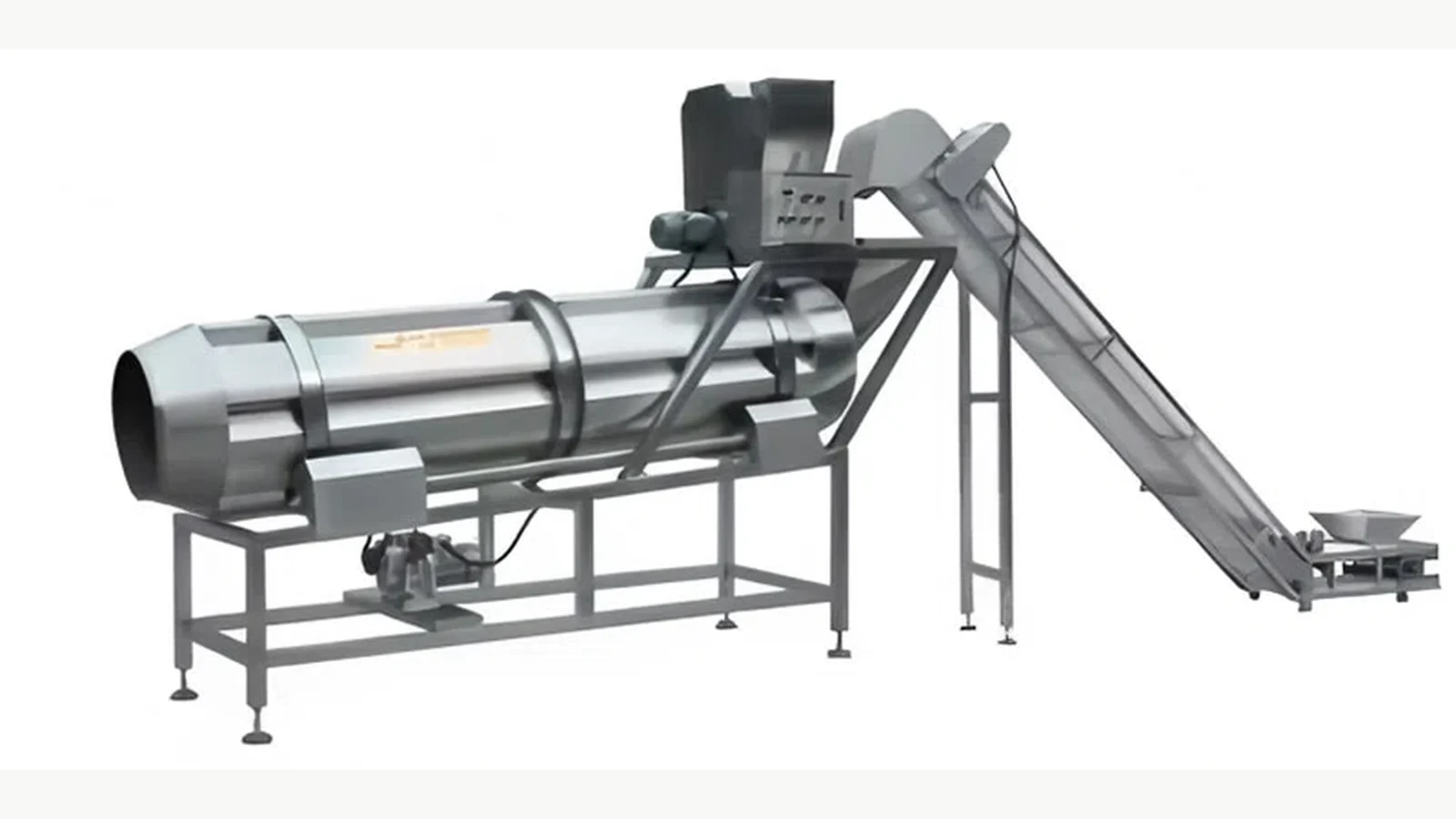
Both routes normally continue to seasoning and cooling, but the product entering that section is not identical. A dried direct-expanded snack and a fried snack can carry different surface oil and seasoning requirements. Confirm whether the scope includes oil spraying, powder dosing, a drum, cooling conveyor and a connection to weighing or packing.
Ask for a trial plan that records the sample formula, mold, cutting setting and finishing route. The approval sample should be identified and retained. If the buyer later changes raw material, wall thickness, oil target or seasoning system, the effect should be reviewed as a process change rather than assumed to be cosmetic.
Before requesting the final offer, use the puffed snack line quotation comparison guide to put drying or frying, seasoning, cooling and buyer-supplied services on the same scope sheet.
Build the RFQ Around Evidence the Engineer Can Use
A useful request for quotation can fit on one page:
- Attach clear finished-product photos, a cross-section and a sample if available.
- State the raw materials and whether the formula is fixed or still under development.
- Confirm whether the reference product is direct-expanded, dried, fried or uncertain.
- List target dimensions, texture direction and hourly output.
- Define seasoning, cooling and packing requirements.
- Provide voltage, heating source, room dimensions, access route and destination.
- Ask the supplier to mark every included, optional and buyer-supplied item.
If the process route is still uncertain, say so. Zhuoheng can review the product evidence before locking the equipment list. Send the snack photo or sample, raw material, output target and factory conditions through the project contact form and request a process review rather than a model-only price.
Related Process and Product Pages
- Fried puffed snack production route and project inputs
- Corn puff stick direct-expanded application
- Cereal ring production application
Planning a puffed snack project?
Share a product photo and your target output. We will recommend a practical line configuration for evaluation.