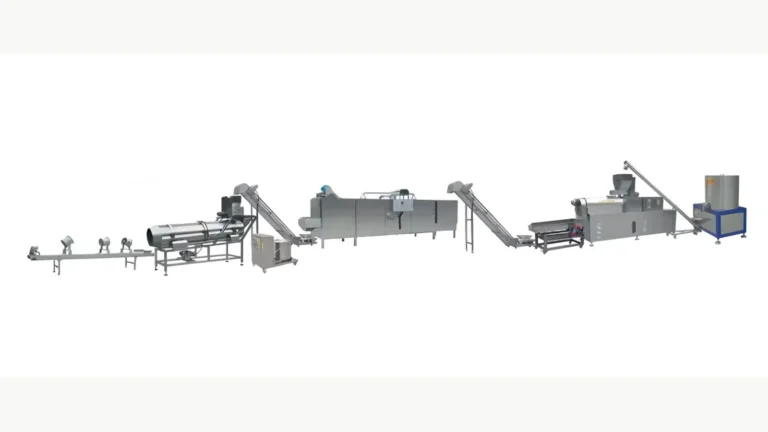
A useful puffed snack factory layout starts with the confirmed product route, not with a machine list placed inside an empty rectangle. Define the snack, raw materials, target output, drying or frying requirement, seasoning method and packing plan first. Then arrange every stage so materials, operators, cleaning work and finished products can move without avoidable crossings.
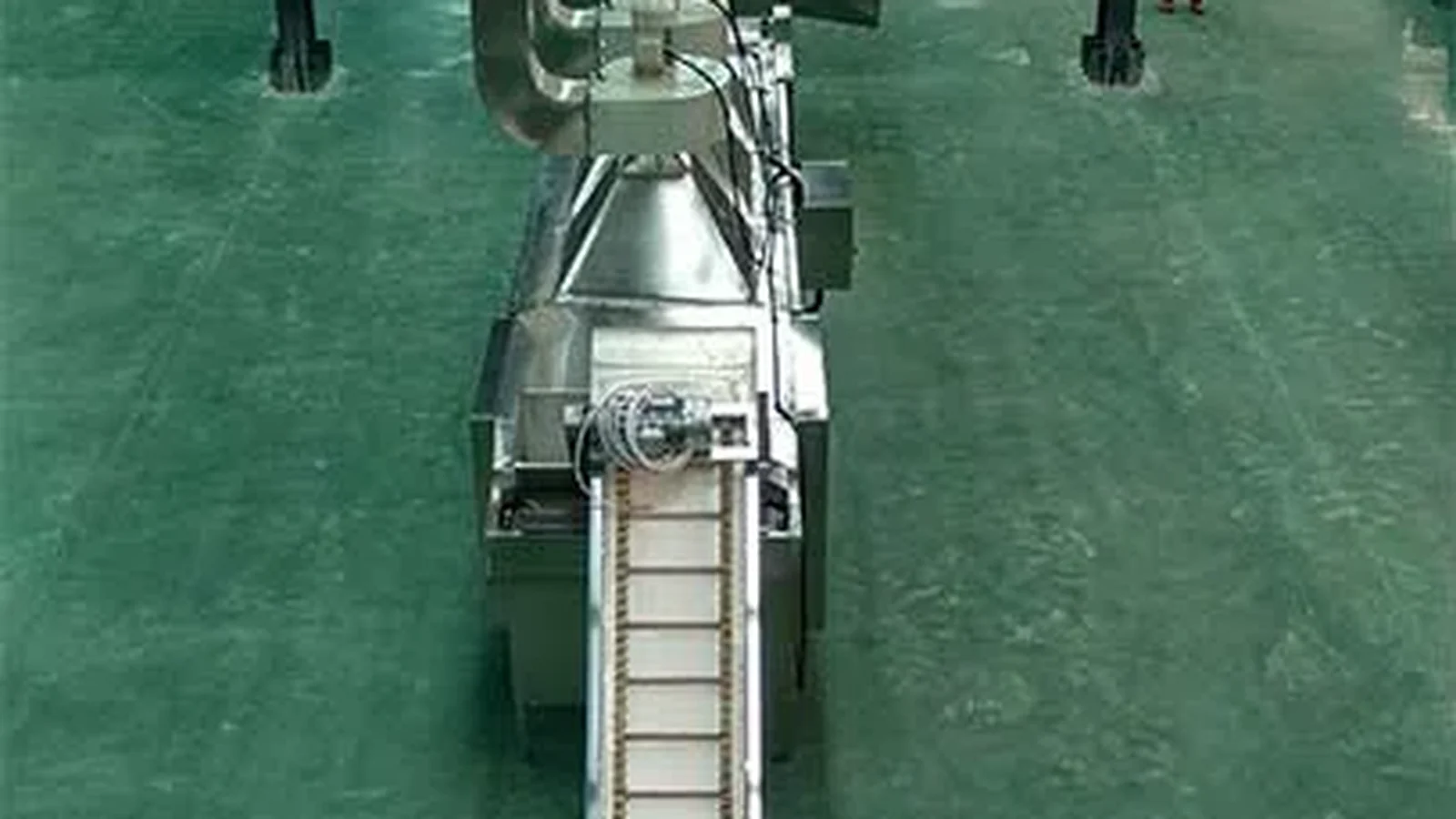
This guide is for direct-expanded snacks and confirmed fried puffed snack routes within Zhuoheng's current product scope. It does not cover every fried food, 2D or 3D snack pellets, core-filled products or tortilla-style products as if they used one interchangeable line. If the route is uncertain, resolve that question before freezing the building plan.
Confirm the Process Route Before Drawing the Layout
Two products that both look “puffed” may need different downstream equipment. A direct-expanded product may move from extrusion and forming to drying, seasoning, cooling and packing. A confirmed fried route may add frying and de-oiling requirements before seasoning and cooling. The building, ventilation, drainage and service discussion changes with that decision.
Use the direct-expanded versus fried puffed snack guide to define the route from the finished product. Send product photos or samples and the intended raw materials rather than relying on a trade name alone.
The preliminary flow should show these stages as applicable:
- raw-material receipt and controlled storage;
- preparation, weighing and mixing;
- feeding, extrusion and forming;
- drying or the confirmed frying and de-oiling route;
- seasoning;
- cooling and temporary holding;
- packing and finished-goods movement.
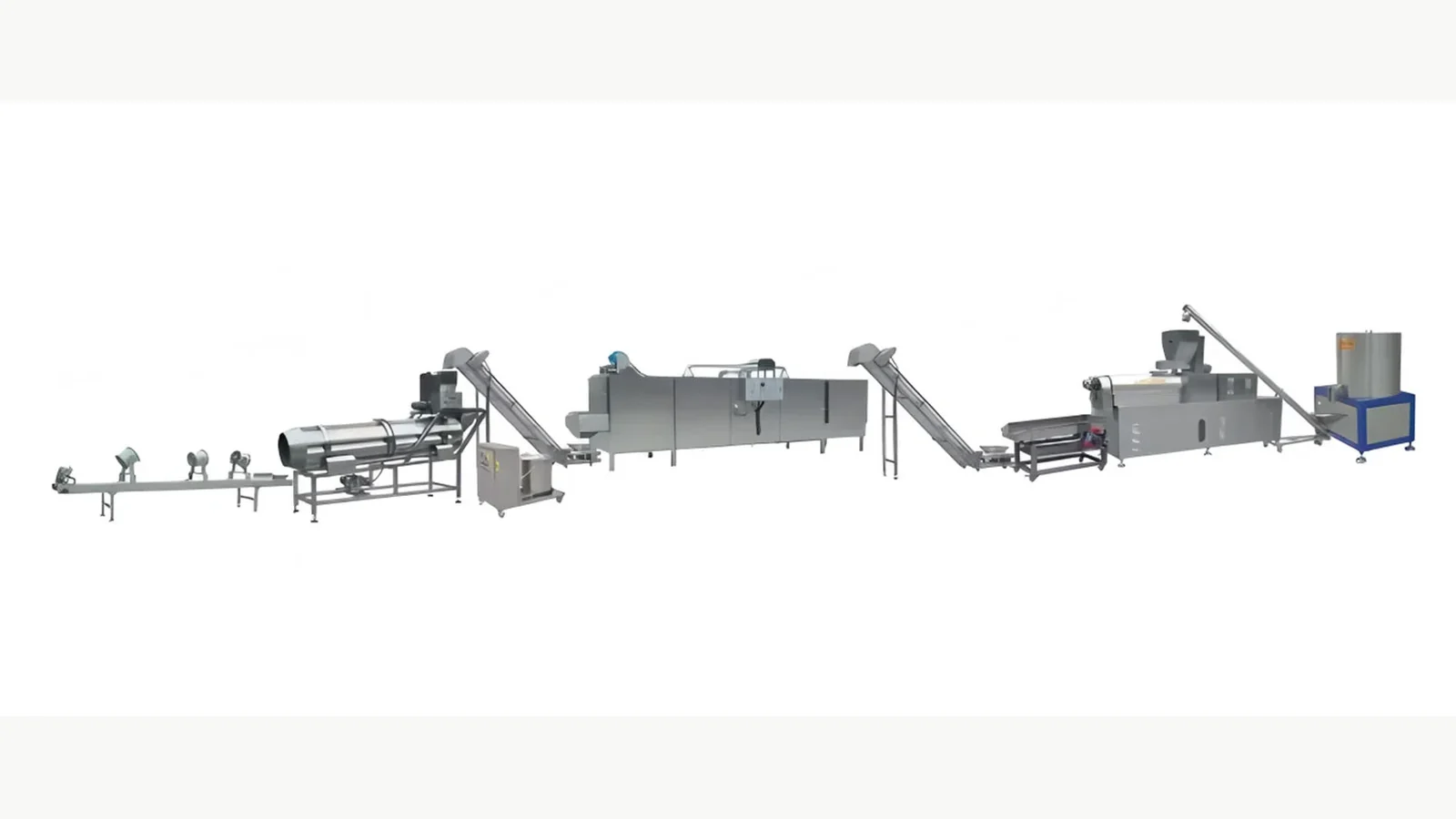
The ZH65 puffed snack production line is a verified product-family reference for discussing a complete line. The offered model and arrangement still have to be selected against the product and output brief.
Convert the Process Into Material and People Flow
Draw separate arrows for raw materials, work in progress, packaging materials, finished cartons, operators and waste. This often reveals conflicts that a simple equipment footprint misses. Flour or grain preparation should not obstruct packing. Finished goods should not have to travel back through a wet cleaning zone. Maintenance access should not depend on moving stored materials each time service is needed.
Review the layout from four viewpoints:
| Viewpoint | Questions for the preliminary plan | Why it matters |
|---|---|---|
| Material flow | Where do ingredients enter, wait and move next? | Prevents unnecessary handling and hidden conveyors |
| Operator flow | Can staff reach controls, inspection points and cleaning areas? | Supports a workable shift routine |
| Service flow | Can motors, screws, belts and removable parts be reached safely? | Reduces later access conflicts |
| Finished-product flow | Where do seasoned snacks cool, wait, pack and leave? | Connects processing to actual dispatch |
A straight line is not mandatory. An L-shaped or other arrangement may suit the building, provided the process order, transfer heights, access and responsibilities remain clear.
Measure More Than the Empty Floor Area
Provide a dimensioned drawing that shows usable length and width, ceiling height, doors, columns, beams, stairs, pits and fixed utility points. Record the width and height of the route through which equipment must enter the building. Mark areas that cannot be used because of fire routes, drains, structural limits or existing production.
Equipment dimensions alone are not a complete working footprint. Allow room for operators, ingredient staging, cleaning, removable components, service access and product transfer. When comparing the ZH65, ZH70, ZH85 and ZH95 families, use the puffed snack line capacity guide to translate saleable demand into an output discussion before asking for a final layout.
Prepare a Utility Schedule With the Site Team
The supplier needs the destination country and the available voltage, frequency and phase. Thermal stages also require the intended heating-source information. The layout should identify where power, water, air, exhaust, drainage or other project-specific connections enter the production area, while the quotation states which connections and building works are inside or outside the supply scope.
Avoid using one generic power or energy number for every proposal. Connected load, normal operation and heating arrangements are different concepts. The selected model, dryer or fryer route, seasoning system and packing boundary must be known before utility requirements can be finalized.
A practical utility sheet records:
- voltage, frequency and phase available at the facility;
- proposed heating source for drying or frying equipment;
- water and drainage points relevant to the confirmed cleaning plan;
- ventilation or exhaust constraints identified by the site team;
- compressed-air demand where included equipment requires it;
- cable, pipe, duct and platform responsibilities;
- local standards and approval responsibilities assigned by the buyer.
Keep the Extrusion Stage in the Full-Line Context
The extruder is central to forming, but it should not become the only reference point in the plan. Feed preparation, drying or frying, seasoning, cooling and packing must be able to accept the planned production schedule. A bottleneck after extrusion can reduce saleable output even when the selected extruder has a higher nominal reference.
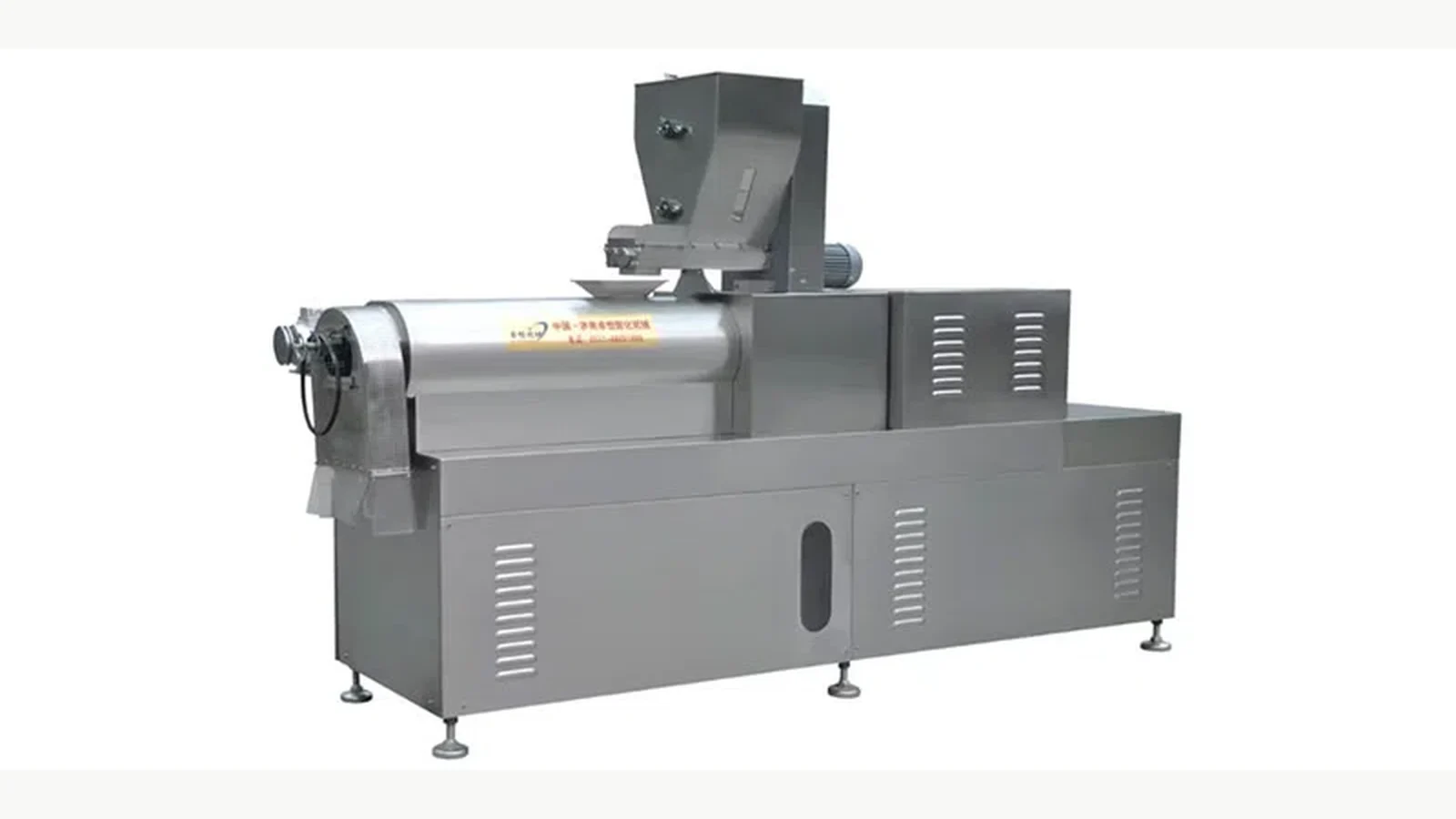
The puffed snack production line cost guide explains why two quotations cannot be compared fairly if one includes complete downstream stages and the other is only a main-machine offer. Apply the same scope discipline to layout drawings.
Plan Cleaning, Changeovers and Product Separation
List the products that will run on the line and group them by raw material, color, seasoning and process route. Frequent changes can affect productive hours, staging space and cleaning work. The layout should give staff practical access to the areas they are expected to inspect and clean.
This article does not prescribe a food-safety system for a particular country. The buyer remains responsible for local hygiene, building, fire, environmental and worker-safety requirements. The equipment discussion should make access and responsibilities visible so those requirements can be reviewed by qualified local parties.
Match Packing and Storage to Saleable Output
Packaging is part of the factory flow, even when the packing machine is sourced separately. Define package sizes, the expected number of products, manual or automatic handling points and where packaging materials are stored. Allow a clear route from cooling to packing and from packing to finished-goods holding.
If the factory will add products later, show the reserved expansion area and utility assumptions on the current drawing. Avoid oversizing the first line only because growth is possible. Compare the normal demand, credible peak, productive hours and changeover burden using the existing capacity guide.
Factory Layout Package for an RFQ
Send one coordinated package rather than separate messages:
- product photos or samples and the intended raw materials;
- direct-expanded, dried or confirmed fried process route;
- normal and peak saleable output requirement;
- product mix, seasoning and packing plan;
- dimensioned building drawing with height and access limits;
- voltage, frequency, phase and intended heating source;
- known ventilation, drainage and local-compliance constraints;
- equipment, utilities, installation and civil-work boundaries;
- destination and planned production schedule.
The sample and technical review checklist helps prepare the product evidence that should accompany the site drawing. Submit both through the project contact form so the process route and factory conditions can be reviewed together.
Related Puffed Snack Resources
- Puffed snack product and model center
- Puffed snack applications overview
- ZH85 puffed snack production line reference
Planning a puffed snack project?
Share a product photo and your target output. We will recommend a practical line configuration for evaluation.