A shipment exception notice preserves what the buyer can verify when snack equipment arrives: transport documents, package count, external marks, seal condition, unpacking sequence, visible equipment condition, missing items, and the status of each open issue. It separates arrival evidence from later diagnosis. A dented cover, wet crate, missing carton, or unreadable tag may require action, but none of those observations alone proves when or why the condition occurred.
The confirmed direct-expanded snack route can include preparation, mixing, feeding, extrusion, cutting, drying, cooling, flavoring, and packing. The ZH65 puffed snack production line provides equipment context. Each shipment record must still follow the approved order, packing list, delivery terms, and actual project configuration.
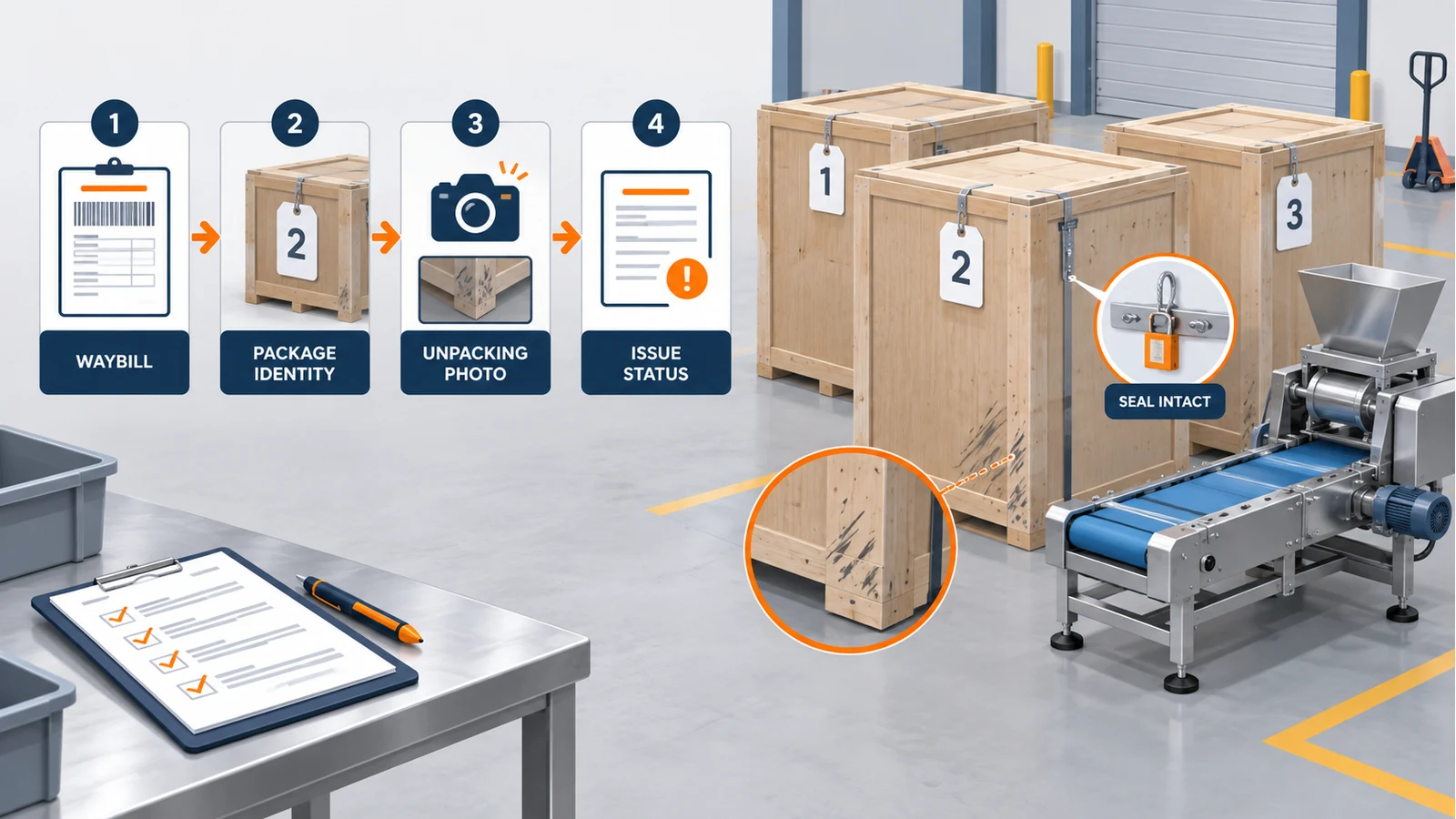
Freeze the Arrival Record Before Unpacking
Create one receipt number and record the arrival date, location, carrier, vehicle or container reference, waybill, order number, packing-list revision, seal number when applicable, and the people present. Photograph the vehicle or container, unopened package group, visible shipping marks, and any obvious external condition before packages move.
Count crates, pallets, cartons, frames, and loose units against the transport document and packing list. Keep three separate results: received and identifiable, received but identity unclear, and not received. A total package count cannot close an item when two packages share unclear marks.
The complete-line quotation scope guide helps confirm the commercial supply boundary. The arrival record uses the final approved scope, not a generic line illustration or an earlier quotation revision.
Record Package Identity and External Condition
For every package, capture the package number, destination mark, gross or net weight only when shown on controlled documents, external dimensions when needed, seal or fastener condition, handling labels, and visible condition on each accessible side. Use a simple photo code that connects the full-package view with details.
Describe facts such as torn wrap, displaced board, wet surface, broken band, puncture, deformed frame, open corner, missing label, or unreadable mark. Avoid conclusions about hidden equipment or transport cause before the package is opened and reviewed by the responsible parties.
If the delivery terms or local procedure require a carrier notation, record who entered it, where it appears, and the time. Commercial claim rights, notification deadlines, insurance requirements, and liability follow the contract and competent advice; this checklist only preserves the evidence set.
Control the Unpacking Sequence
Give each package an opening sequence and observer. Photograph the package immediately before opening, the first internal view, protective material, restraint points that are visible without unsafe disturbance, equipment identification, loose accessories, and the empty package after removal. Preserve labels with their package code.
Stop the controlled sequence when the team encounters unstable equipment, unexpected load movement, damaged lifting points, exposed electrical parts, chemical leakage, or another condition outside the approved handling method. Qualified personnel and the relevant handling plan govern safe access and movement.
Separate Equipment Identity from Condition
Connect every observed item to an equipment tag, machine name, model or serial reference when visible, and package number. Take a full-machine view before close-up images. A close-up of a bent panel or loose connector is weak evidence when reviewers cannot identify the machine or orientation.
Transcribe nameplates and marks, but retain the original images. Mark unreadable or conflicting identities as open. The supplier can then compare the evidence with the approved schedule and shipment register without guessing from color, shape, or a familiar nickname.
For loose parts and accessories, use a counted group photograph plus individual identity where practical. Record the associated machine and packing-list row. Similar fasteners, molds, cables, or sensors require controlled identification before they are declared missing or interchangeable.
Build One Exception Row per Observable Issue
Assign each issue a unique number. Record package, item, observation, photo codes, quantity affected, date, temporary protection applied, current custody, and the requested next action. Keep visible condition separate from suspected cause and proposed remedy.
Classify the row by decision status: information needed, joint review required, replacement identification required, quantity reconciliation required, local protection authorized, or closed with evidence. A status label keeps urgent items visible without presenting an unverified diagnosis as fact.
The replacement-part photo pack guide supports later component identification. An arrival exception stays tied to the shipment event and original package evidence.
Map Received Equipment to the Planned Route
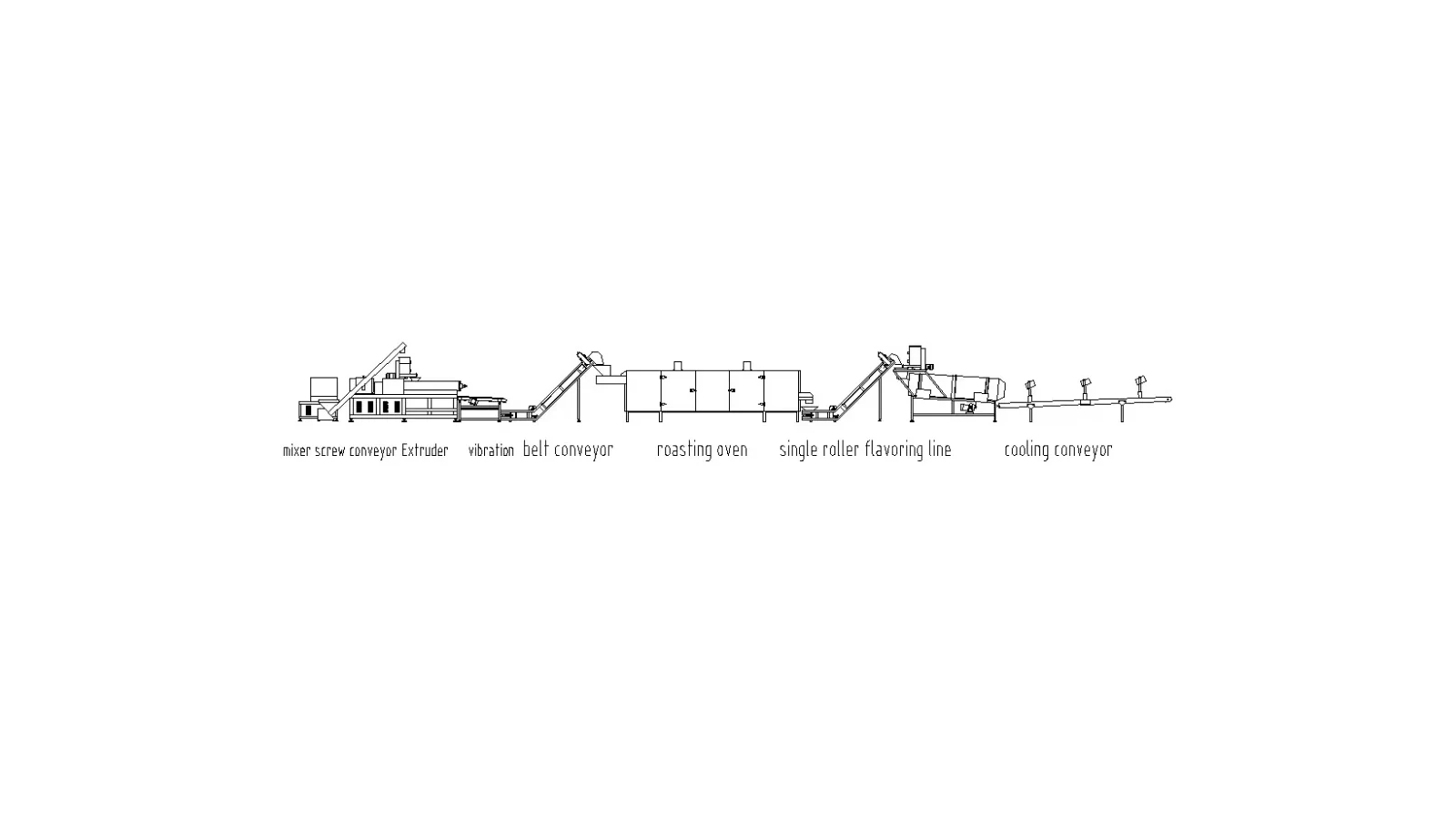
Use a route diagram or approved layout to place received main units and auxiliaries in process order. The puffed snack factory layout and utilities guide can help reviewers understand the intended position, while the receiving record confirms only identity and condition at arrival.
Keep installation readiness separate. Receipt of a machine does not confirm foundation, utilities, alignment, guarding, electrical connection, or operational release. Those decisions require their own approved checks after the shipment exceptions are controlled.
Use a Closeout Table
| Field | Arrival evidence | Closeout requirement |
|---|---|---|
| Transport reference | Waybill, container or vehicle, seal | Same shipment identified |
| Package count | Packing list and physical count | Missing or unclear units resolved |
| Package condition | Full views, marks, seals, surfaces | Observation acknowledged |
| Equipment identity | Tag, plate, full-machine view | Approved schedule matched |
| Exception | Neutral description and photo codes | Owner and next action named |
| Temporary action | Protection, isolation, custody | Authorization recorded |
| Final status | Accepted, repaired, replaced, credited, or open | Evidence and date attached |
Revise the notice under the same receipt number. Email threads, carrier notes, supplier replies, repair records, and replacement documents can be linked to the relevant row. This prevents one closed issue from hiding a separate missing package or identity mismatch.
Related Planning Guides
- Identify later component needs with the replacement-part photo pack guide.
- Place equipment with the puffed snack factory layout and utilities guide.
- Keep arrival exceptions separate from the extruded snack startup scrap log.
Prepare the Evidence Review
Send the order reference, waybill, packing list, package marks, arrival and unpacking photos, exception table, destination and required response date for an evidence review.
Planning a puffed snack project?
Share a product photo and your target output. We will recommend a practical line configuration for evaluation.